When Quiet Becomes the Enemy: Understanding the Fear of Digital Silence
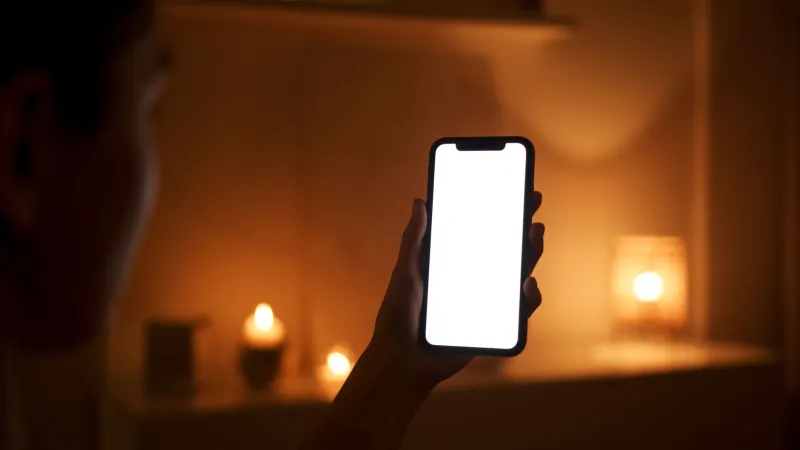
There is a particular kind of dread that arrives not with a notification, but with the absence of one. The screen dims. The inbox goes still. The ambient hum of the internet—that invisible, constant reassurance that the world is moving, that you are tethered to it—simply stops. For millions of Americans, this moment is called rest. For others, it is the beginning of something that feels alarmingly like terror.
This is not nomophobia, the well-documented fear of being without a mobile phone. It is something more paradoxical, and in many ways more difficult to articulate: a profound anxiety triggered not by the prospect of missing important information, but by silence and disconnection themselves. The content doesn't matter. The messages don't matter. What matters, to the nervous system of someone experiencing this fear, is that the stimulation has stopped—and that stopping feels catastrophic.
Clinicians are beginning to take notice.
A Fear Without a Formal Name
The Diagnostic and Statistical Manual of Mental Disorders (DSM-5) does not yet contain a dedicated entry for what some researchers are calling "kenophobia of the digital environment"—a fear of digital emptiness. The term borrows from the Greek kenos, meaning void or empty, and it describes something distinct from generalized anxiety disorder, social anxiety, or even the more commonly discussed fear of missing out (FOMO).
Where FOMO is content-driven—rooted in the worry that others are having experiences you are excluded from—this emerging condition is stimulus-driven. Sufferers are not anxious about what they're missing. They are anxious about the absence itself. Silence, in both its literal and digital forms, becomes the threat.
"What I hear from clients is that it's not about the phone, exactly," says one licensed clinical psychologist practicing in Chicago who works extensively with anxiety disorders. "It's that the silence feels like a kind of freefall. Their nervous systems have been calibrated to expect constant input, and when that input disappears, the body interprets it as danger."
That recalibration, therapists suggest, may be the crux of the issue.
How the Brain Learned to Fear Stillness
Human beings are not evolutionarily wired for the kind of sustained, low-grade stimulation that smartphones and social media provide. Dopaminergic reward pathways—the neural circuits that govern motivation, pleasure, and alertness—respond to novelty. Each ping, scroll, and refresh delivers a small neurochemical reward. Over time, and particularly for individuals who are already predisposed to anxiety, the brain begins to treat that stimulation as a baseline rather than a bonus.
When the stimulation disappears, the brain does not simply return to a neutral state. For some people, it interprets the absence as a signal that something has gone wrong. This is not unlike the way a person who relies on a particular coping mechanism—food, exercise, or social interaction—can experience acute distress when that mechanism is removed, even temporarily.
The result is an anxiety response that is, by any clinical measure, disproportionate to the actual threat. A camping trip without cell service, a power outage, an airplane in a dead zone: these ordinary circumstances become sources of genuine panic.
"I've had clients describe it as feeling like they're disappearing," notes one therapist based in Austin, Texas, who specializes in technology-related anxiety. "Not that the world is moving on without them—they're not worried about that. It's more existential. The silence makes them feel like they don't quite exist."
The Sufferer's Experience
For those who live with this fear, the experience is often accompanied by shame. Digital dependency carries significant cultural stigma, and admitting that silence causes panic can feel embarrassing in a way that other phobias do not. Unlike arachnophobia or claustrophobia, there is no widely understood cultural script for this fear—no easy shorthand that communicates its severity without judgment.
Many sufferers describe a predictable cascade of symptoms when disconnection occurs: initial restlessness, followed by irritability, then a mounting sense of dread that can escalate into full panic attacks. Physical symptoms—racing heart, shallow breathing, difficulty concentrating—are common. So is what one sufferer, a 34-year-old marketing professional from Atlanta, described as "a kind of static in my head, like a channel that's lost its signal."
"I know it doesn't make sense," she said. "I'm not waiting on anything important. There's nothing I need to see. But when the phone dies and I can't charge it, I feel like I'm in danger. My body just goes into emergency mode."
This disconnection between rational understanding and physiological response is a hallmark of phobic anxiety—and one reason that simply telling sufferers to "put the phone down" is not only unhelpful but counterproductive.
Treatment Approaches and the Path Forward
Because this condition lacks a formal diagnostic category, treatment tends to be adapted from evidence-based approaches used for other anxiety disorders. Cognitive behavioral therapy (CBT) remains the most widely recommended framework, helping sufferers identify the automatic thoughts that accompany silence and systematically challenge their accuracy.
Exposure therapy—the gradual, structured introduction of the feared stimulus—is also showing promise. In this context, that means carefully scaffolded periods of disconnection, beginning with very short intervals and extending them incrementally as the client builds tolerance. The goal is not to eliminate the client's relationship with technology, but to restore the nervous system's ability to register silence as neutral rather than threatening.
Mindfulness-based interventions have also demonstrated value, particularly practices that help individuals learn to observe physical sensations without immediately interpreting them as dangerous. For someone whose body has learned to treat quiet as a crisis signal, developing a more observational relationship with internal states can be genuinely transformative.
What clinicians consistently emphasize, however, is the importance of validating the experience before attempting to modify it. This is a real fear. It causes real suffering. And it is, in many respects, a logical outcome of an environment that has systematically rewarded constant connectivity for more than a decade.
Recognizing a New Kind of Quiet
As a culture, the United States has spent considerable energy debating the effects of screen time on mental health—particularly for younger generations. But the conversation has largely focused on what people are consuming online, rather than on what happens neurologically when the consumption stops.
The fear of digital silence inverts that conversation. It asks not what we are doing when we are online, but who we have become—and what it means that for a meaningful number of people, the absence of stimulation now registers as an emergency.
Understanding this fear does not require condemning technology or romanticizing a pre-digital past. It requires, instead, a clear-eyed acknowledgment that the human nervous system adapts to its environment—and that when that environment changes faster than our psychological frameworks can accommodate, new and unfamiliar anxieties are the predictable result.
If you recognize yourself in these descriptions, it may be worth speaking with a mental health professional who has experience working with anxiety disorders and technology-related concerns. The silence is not dangerous. But the fear of it is real—and it deserves to be taken seriously.