Alone and Afraid: Understanding Autophobia in an Age of Constant Connection
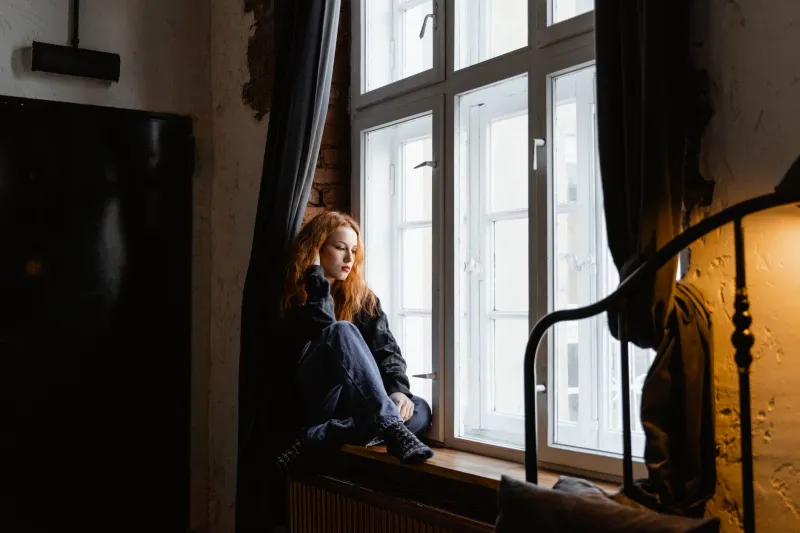
There is a particular silence that falls over an empty apartment on a Sunday afternoon. For most people, that silence is neutral—sometimes even welcome. But for a growing number of Americans, that same quiet carries the weight of dread. The heart rate climbs. Thoughts spiral. The impulse to reach for a phone, to turn on the television, to text anyone at all, becomes not a preference but a compulsion.
This is autophobia: the persistent, irrational, and disproportionate fear of being alone or of oneself. And according to mental health professionals across the country, it is becoming harder to ignore.
What Autophobia Actually Is—and Isn't
The term itself is frequently misunderstood. Autophobia does not describe a dislike of solitude, nor does it refer simply to loneliness, which is a universal human emotion. Clinically speaking, autophobia is classified within the specific phobia category of the Diagnostic and Statistical Manual of Mental Disorders (DSM-5), characterized by marked and persistent fear that is excessive or unreasonable and triggered by the presence—or anticipation—of a specific situation: in this case, being without other people.
Individuals with autophobia may go to extraordinary lengths to avoid being alone. They may fill every waking hour with social engagements, struggle to sleep without another person present, or experience full panic attacks when solitude becomes unavoidable. The fear is not merely uncomfortable; it is functionally disabling.
This stands in sharp contrast to introversion, which describes a personality trait involving a preference for quieter environments, or even to social anxiety, which centers on fear of judgment within social situations rather than fear of their absence.
The Pandemic's Quiet Aftermath
Mental health researchers have pointed to the COVID-19 pandemic as a significant inflection point in how Americans relate to solitude. The years of enforced isolation—remote work, social distancing, the collapse of communal routines—produced a paradox: rather than teaching people to tolerate being alone, prolonged involuntary isolation appears to have deepened the fear of it for many.
Dr. Julianne Holt-Lunstad, a psychologist at Brigham Young University whose research focuses on social connection and health, has long documented the physiological toll of loneliness. What the pandemic revealed, however, was a secondary effect: that the disruption of social rhythms can recalibrate the nervous system's baseline, making ordinary solitude feel threatening in ways it previously did not.
For individuals already predisposed to anxiety, those years of disruption may have planted the seeds of a more entrenched fear—one that persisted long after restrictions lifted and offices reopened.
The Social Media Disconnection Paradox
Americans are, by most measurable standards, more connected than any previous generation in history. Smartphones deliver a continuous stream of social contact. Notifications arrive around the clock. Video calls can reach anyone on the planet within seconds. And yet clinical reports suggest that anxiety around being alone is intensifying rather than diminishing.
This paradox has a neurological explanation. Constant digital stimulation conditions the brain to expect perpetual input. When that input is removed—when the phone is set down, when the notifications stop—the nervous system can interpret the quiet not as rest but as deprivation. Over time, the brain may begin to associate solitude itself with the discomfort of withdrawal.
Furthermore, social media platforms are architecturally designed to surface evidence of others' social lives, subtly reinforcing the message that being alone is an aberration. For someone already inclined toward anxiety, the cumulative effect of that messaging can be profound.
Shifting Work Patterns and the Loss of Incidental Community
Beyond technology, the structural changes in how Americans work have quietly eroded the incidental social contact that once buffered against isolation. The rise of remote and hybrid work arrangements has eliminated the casual daily rhythms of office life—the brief conversations by the coffee machine, the shared lunch, the ambient presence of colleagues—that many people did not consciously value until they disappeared.
For individuals with autophobic tendencies, the home office has become a particularly challenging environment. Without the natural structure of a shared workplace, the hours spent alone can feel not productive but abandoned. Mental health counselors in cities like New York, Chicago, and Los Angeles have reported increased caseloads involving clients whose anxiety around solitude escalated significantly after transitioning to remote work arrangements.
Recognizing Clinical Symptoms
Distinguishing between a general discomfort with solitude and a clinical phobia requires attention to several key markers. Mental health professionals typically look for the following when evaluating autophobia:
- Disproportionate distress: The fear response is significantly greater than the situation warrants.
- Avoidance behavior: The individual reorganizes their life to prevent being alone, even at significant personal cost.
- Physical symptoms: Panic attacks, shortness of breath, rapid heartbeat, sweating, or dizziness when alone or when anticipating solitude.
- Duration: Symptoms persist for six months or longer.
- Functional impairment: The phobia meaningfully interferes with work, relationships, or daily life.
Experiencing occasional discomfort when alone does not constitute a phobia. The clinical threshold is reached when the fear becomes controlling.
Evidence-Based Paths Toward Relief
The encouraging reality is that specific phobias, including autophobia, are among the most treatable categories of anxiety disorders. Several therapeutic approaches have demonstrated consistent effectiveness.
Cognitive Behavioral Therapy (CBT) remains the gold standard. By examining and restructuring the thought patterns that fuel the fear—the belief, for example, that being alone signals abandonment or danger—CBT helps individuals develop a more accurate and less threatening relationship with solitude.
Exposure therapy, typically conducted gradually and within a controlled therapeutic framework, involves systematically increasing a person's tolerance for being alone. Beginning with brief, structured periods of solitude and building incrementally, this approach allows the nervous system to learn through direct experience that aloneness is safe.
Mindfulness-based interventions have also shown promise. Practices that cultivate present-moment awareness can interrupt the catastrophic thinking that often accompanies autophobic episodes, offering a way to remain grounded during periods of solitude rather than fleeing them.
For some individuals, medication may be appropriate as a complement to therapy, particularly where co-occurring depression or generalized anxiety is present. A licensed psychiatrist or primary care physician can assess whether pharmacological support is warranted.
Relearning the Value of Your Own Company
Culturally, Americans have not always made it easy to be alone. Productivity culture treats unstructured time with suspicion. Entertainment infrastructure is built for distraction. Even the language around solitude—"killing time," "sitting with yourself"—frames it as an ordeal to be endured rather than a resource to be cultivated.
Yet research in positive psychology consistently finds that the capacity for what psychologist Ester Buchholz called "alone time" is associated with creativity, self-awareness, emotional regulation, and psychological resilience. The ability to be comfortably alone is not a symptom of isolation; it is a mark of psychological health.
For those whose fear of solitude has crossed into clinical territory, that capacity is not lost—it is temporarily obscured. With appropriate support, it can be recovered.
If you recognize yourself in these descriptions, speaking with a licensed mental health professional is a meaningful first step. Autophobia has a name, and having a name for a fear is, as any good clinician will tell you, the beginning of understanding it.