Scrolling Into Fear: The Digital Phobias Quietly Reshaping Gen Z Mental Health
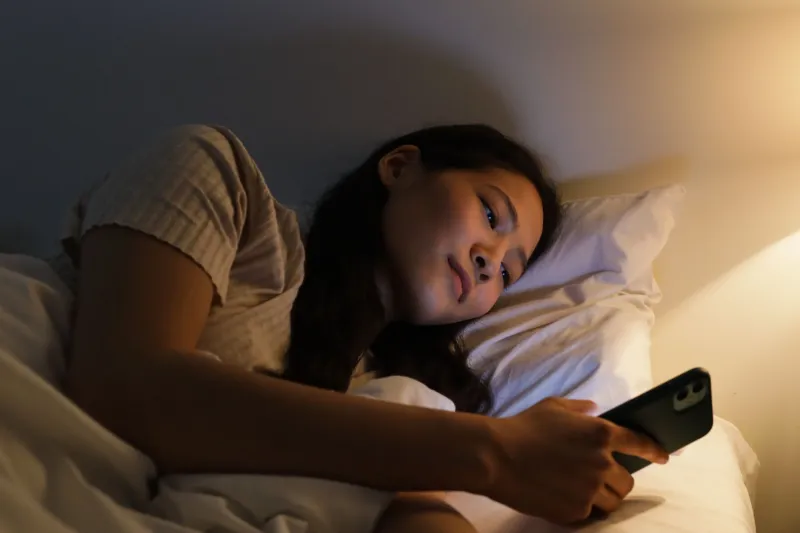
For most of human history, the catalog of things people feared remained relatively stable — heights, enclosed spaces, social humiliation, the dark. Then came the smartphone. Within a single generation, a entirely new taxonomy of dread has emerged, one calibrated not to predators or physical danger but to notification badges, follower counts, and the particular horror of a phone battery dropping to three percent.
Clinicians, researchers, and mental health advocates are increasingly sounding the alarm: digital-native generations are developing phobias that have no meaningful precedent in psychological literature, and the pace of that development is accelerating alongside the platforms that fuel them.
Nomophobia: The Fear With a Name Most People Don't Know They Need
Nomophobia — a contraction of "no-mobile-phone phobia" — was first formally documented by UK researchers in 2008, but its prevalence has grown exponentially in the United States over the intervening years. Defined as an irrational and persistent fear of being without one's mobile device or losing access to it, nomophobia presents with symptoms that mirror classical anxiety disorders: elevated heart rate, shortness of breath, sweating, and acute cognitive distress.
What distinguishes it from ordinary inconvenience is its irrationality. Sufferers may experience full-scale panic responses in situations where being without a phone carries no genuine consequence — a dinner table, a short commute, a classroom. The phone itself has become, for many individuals, a psychological security object, and its absence triggers responses that the nervous system typically reserves for genuine threats.
Dr. Michelle Drouin, a researcher at Purdue University Fort Wayne who has studied nomophobia extensively, has described the condition as sitting at the intersection of dependency and anxiety. Among college-aged Americans, estimates suggest that as many as two-thirds of the population experience some degree of nomophobic symptoms, with a significant subset meeting clinical thresholds for a diagnosable anxiety disorder.
The Algorithm as Anxiety Engine
Beyond the fear of losing one's device lies a more complex and arguably more insidious phenomenon: the way social media platforms are architected to manufacture and sustain states of emotional arousal — including fear.
Algorithmic content delivery systems are designed, fundamentally, to maximize engagement. Fear, outrage, and social anxiety are among the most engagement-productive emotional states a platform can induce. Content that provokes these responses keeps users on-platform longer, generates more interactions, and feeds the data loops that make the systems increasingly effective at targeting individual psychological vulnerabilities.
For Gen Z users — defined broadly as those born between 1997 and 2012 — this architecture has intersected with developmentally critical periods of identity formation, social comparison, and emotional regulation. The result, according to a growing body of clinical literature, is a cohort experiencing anxiety disorders at rates substantially higher than any previously documented generation.
One phenomenon receiving increasing clinical attention is what some researchers have termed "doomscrolling anxiety" — a compulsive, fear-driven consumption of distressing content that users feel unable to interrupt despite the psychological harm it causes. Unlike a traditional phobia with a discrete trigger, this condition involves a feedback loop in which the behavior that causes distress is simultaneously the behavior the sufferer cannot stop.
Facebook-Induced Anxiety and the Social Comparison Spiral
Facebook, despite its declining popularity among younger users, introduced a social architecture that has profoundly shaped the platforms that succeeded it: the quantified social self. Likes, shares, comments, and follower counts transformed social interaction into a form of continuous public performance evaluation.
Researchers have documented a specific anxiety pattern associated with this architecture, sometimes informally called "Facebook anxiety" or, more broadly, social media anxiety disorder. Characterized by obsessive monitoring of one's own social metrics, intense distress in response to perceived social underperformance, and compulsive comparison with the curated presentations of others, this condition shares structural features with both obsessive-compulsive disorder and social anxiety disorder.
For Gen Z users who migrated from Facebook to Instagram, TikTok, and Snapchat, the underlying mechanism followed them. The platforms changed; the psychological architecture did not.
Real accounts from young Americans describe the experience in strikingly consistent terms. A 22-year-old college student in Chicago recounted checking her Instagram engagement metrics within minutes of posting, feeling her anxiety spike when early numbers fell below expectations, and spending the subsequent hours in a state of low-grade dread that she struggled to explain to friends who did not share the experience. "I knew it was irrational," she said. "That made it worse, not better."
FOMO as Clinical Phenomenon
Fear of Missing Out — colloquially known as FOMO — has graduated from cultural shorthand to a subject of serious psychological inquiry. Research published in journals including Computers in Human Behavior has documented FOMO as a genuine anxiety construct with measurable psychological and physiological correlates.
For some individuals, FOMO operates at subclinical levels — a mild, manageable discomfort. For others, particularly those with underlying anxiety vulnerabilities, social media platforms transform it into something more debilitating: a persistent sense that one's life is inadequate relative to the lives being performed by others online, combined with an urgent, irrational compulsion to monitor those performances continuously.
The clinical picture is further complicated by what researchers describe as "phantom notification syndrome" — the experience of perceiving phone vibrations or notification sounds that have not actually occurred. This phenomenon, documented in multiple studies of heavy smartphone users, suggests that for some individuals, the anxiety associated with social media has become sufficiently pervasive to alter sensory perception itself.
What Clinicians Are Seeing — and Doing
Therapists working with Gen Z patients in the United States report a meaningful shift in presenting concerns over the past several years. Anxiety tied to digital environments — social performance, online identity, platform engagement, and device access — now appears with regularity in clinical settings that a decade ago would rarely have encountered such concerns.
Cognitive behavioral therapy (CBT) remains the most well-supported intervention for these conditions, adapted to address the specific thought patterns and behavioral loops that digital phobias involve. Structured digital detox protocols, mindfulness-based approaches, and, in some cases, pharmacological support for underlying anxiety disorders are also being employed.
Crucially, clinicians emphasize that these phobias are real. They are not character weaknesses, generational fragility, or the product of excessive sensitivity. They are anxiety disorders — diagnosable, treatable, and worthy of the same clinical seriousness as any other phobia on the established roster.
Recognizing the Signs
For readers who suspect they or someone they know may be experiencing a digital phobia, several markers are worth noting. These include disproportionate distress in response to phone loss or low battery, compulsive checking behaviors that continue despite causing distress, significant anxiety tied to social media metrics or perceived social performance, and an inability to disengage from distressing online content.
These experiences exist on a spectrum, and not every uncomfortable relationship with technology constitutes a clinical disorder. However, when these patterns cause meaningful interference with daily functioning, relationships, or wellbeing, professional consultation is warranted.
The phobias of the digital age may be new. The tools for addressing them are not, and they work.
If you recognize these patterns in your own experience, the Resources section of UnusualPhobias.com provides guidance on finding qualified mental health professionals specializing in anxiety disorders.