Fear by the Calendar: How Certain Phobias Follow the Seasons
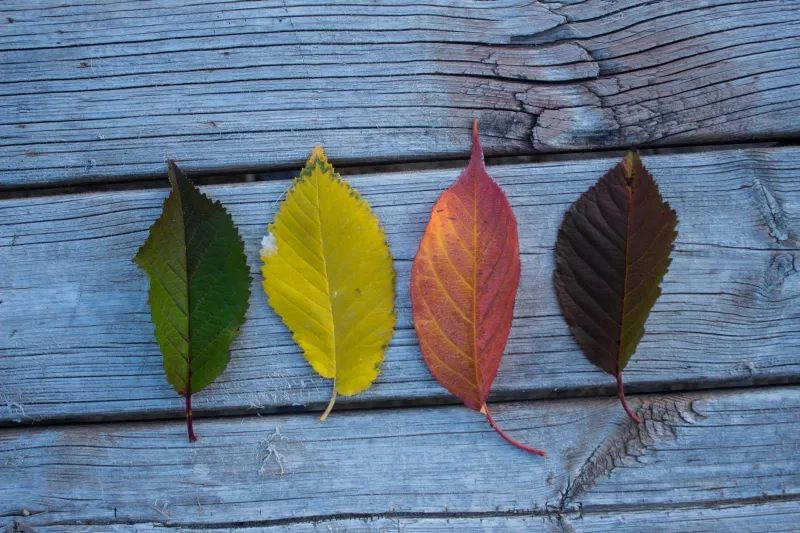
Anxiety does not always operate on a fixed schedule. But for a surprising number of people, specific fears — some of them clinically recognized phobias, others sitting at the threshold of diagnosis — arrive with the reliability of a changing season. They intensify when the air warms, or when the academic year resumes, or when a particular holiday begins its slow approach on the cultural horizon.
This is not coincidence. It reflects something meaningful about the relationship between external environment, social expectation, and the internal architecture of fear.
Spring: Bloom, Pollen, and the Return of the Outdoors
For many Americans, spring is synonymous with renewal. For others, it marks the beginning of several months of genuine physiological and psychological distress.
Anthophobia — the fear of flowers — is one of the lesser-discussed phobias that peaks sharply in spring. While it may sound unusual, the fear can be rooted in a range of associations: the perceived unpredictability of insects that accompany blooming plants, a history of severe allergic reactions, or, in some cases, flowers as symbols of grief and loss encountered during formative experiences. For individuals who have spent time in hospital settings surrounded by floral arrangements, the association can become deeply conditioned.
Allergic rhinitis, or hay fever, affects roughly 25 to 30 million Americans and is itself a trigger for a related but distinct anxiety: the fear of suffocation, known as pnigophobia. When a person's airways are compromised — even mildly — the physical sensation can activate a fear response that extends well beyond the original allergic trigger. Over time, the approach of spring itself can become the cue for anticipatory anxiety, days or weeks before pollen counts actually rise.
Agoraphobic tendencies also frequently resurface in spring, though for reasons that run counter to the popular image of agoraphobia as a fear of open spaces. More precisely, agoraphobia involves the fear of situations perceived as difficult to escape or in which help might be unavailable. After months of winter isolation — particularly in northern states where outdoor activity is genuinely limited — the sudden social expectation to be outdoors, in crowds, at farmers markets and outdoor festivals, can feel profoundly threatening to someone whose comfort zone has quietly contracted over the colder months.
Summer: Heat, Crowds, and Exposed Skin
Summer carries its own distinct anxieties. Ochophobia, the fear of crowds, intensifies during a season defined by public gatherings: Fourth of July celebrations, outdoor concerts, beach crowds, amusement parks. For individuals managing this phobia, summer can feel like a sustained period of social navigation, each weekend presenting a new situation in which retreat is difficult and the density of other people is unavoidable.
The season also tends to surface body-related anxieties. While not a phobia in the clinical sense, dysmorphic preoccupation frequently intensifies during summer, when cultural pressure to expose more of the body is at its peak. For individuals with body dysmorphic disorder — or those managing fears related to physical appearance — the seasonal shift in dress norms can trigger significant distress.
Astraphobia, the fear of thunder and lightning, is another summer visitor. Thunderstorm frequency peaks across much of the United States between June and August, and for the estimated 2 to 3 percent of the population with a clinically significant fear of storms, this period can involve sustained vigilance: monitoring weather apps, avoiding outdoor plans, and, in more severe cases, disrupting sleep on a near-nightly basis during storm season.
Autumn: Academic Dread and the Approach of Darkness
September in the United States carries a particular psychological weight. The return to school — whether one is a student, a parent, or simply someone attuned to the cultural calendar — marks a transition that activates a cluster of anxieties that quieted over the summer.
Didaskaleinophobia, the fear of school, is most commonly discussed in the context of children. However, the underlying anxieties it represents — fear of evaluation, fear of social comparison, fear of failure — do not necessarily resolve at graduation. For adults who associate the back-to-school period with early experiences of academic pressure or social exclusion, autumn can trigger a predictable resurgence of anxiety that seems disconnected from their current circumstances.
The shortening of days also begins in earnest during autumn. Research consistently links reduced daylight exposure to mood disruption, and for individuals managing fears associated with darkness — nyctophobia — the gradual retreat of evening light can produce a slow-building dread that intensifies through October and November. This is not merely about the dark itself, but about the loss of a reliable buffer between day and night, between safety and the unknown.
Winter: Holiday Pressure and the Weight of Expectation
The winter holiday season is perhaps the most psychologically complex period on the American calendar. For many people, it carries the weight of family obligation, financial pressure, and the performance of a particular emotional register — warmth, generosity, gratitude — that may feel inaccessible or exhausting.
Sociophobia, or social anxiety disorder, tends to peak during the holiday season for reasons that are not difficult to understand. The period between Thanksgiving and New Year's Eve is saturated with social obligations: family gatherings, workplace parties, neighborhood events. For individuals who manage social anxiety during the rest of the year through careful avoidance and selective engagement, the holiday season compresses months of manageable exposure into a matter of weeks.
Heortophobia — the fear of holidays — is a genuine, if rarely discussed, phobia. It encompasses not only the social demands of the season, but the emotional associations that recurring occasions carry. For individuals who have experienced significant loss, family estrangement, or trauma during holiday periods, the annual return of those occasions can activate grief, hypervigilance, and avoidance responses that look, on the surface, like misanthropy or social withdrawal.
Why the Seasonal Pattern Matters
Recognizing that a phobia has a seasonal rhythm is clinically valuable for several reasons. It allows for anticipatory preparation — beginning therapeutic work before the triggering period arrives, rather than in the midst of it. It also helps individuals distinguish between a genuine phobia and the more diffuse anxiety that many people experience during seasonal transitions, which can inform decisions about treatment intensity.
For those working with therapists, tracking the seasonal arc of a phobia — noting when it begins to intensify, when it peaks, and when it recedes — can provide useful data for treatment planning. Exposure work conducted in the off-season, when the triggering stimuli are less present, can build tolerance that holds when the season returns.
Finding the Pattern in Your Own Anxiety
If you have noticed that your anxiety tends to spike at the same time each year, it is worth examining whether the seasonal environment is playing a larger role than you have previously recognized. The calendar is not neutral. It carries cultural weight, environmental change, and the accumulated residue of past experience.
Understanding that weight — naming it, mapping it, and approaching it with deliberate preparation — is not a small thing. For many people, it is precisely the kind of clarity that makes the difference between being overtaken by a seasonal fear and meeting it with something closer to readiness.