When the Air Itself Becomes a Threat: Understanding the Fear of Scent
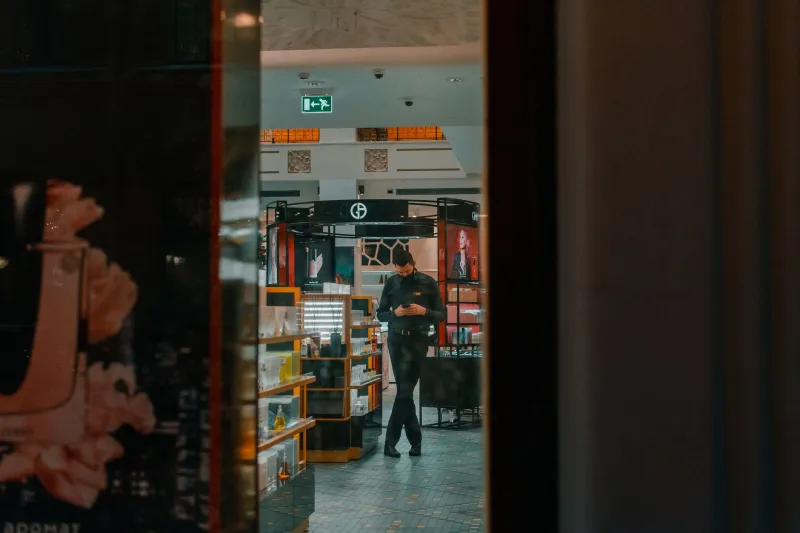
Walk through any major American shopping mall and you will encounter, almost immediately, a wall of fragrance. Department stores pipe scented air through their ventilation systems. Candle boutiques leave their doors open. The Abercrombie & Fitch at the end of the corridor broadcasts its signature cologne like a distress signal. For the vast majority of shoppers, these olfactory intrusions register as background noise — perhaps pleasant, perhaps mildly irritating, but fundamentally inconsequential.
For individuals living with osmophobia, the same environment can feel genuinely threatening.
Osmophobia — derived from the Greek osme, meaning smell, and phobos, meaning fear or dread — is a clinically recognized anxiety condition characterized by an intense, disproportionate fear of or aversion to odors. It is not simply a matter of disliking strong perfume. At its most severe, osmophobia produces panic responses, avoidance behaviors, and a measurable reduction in quality of life. Yet because smell is so deeply embedded in everyday social ritual in the United States, those who suffer from scent-based anxieties often find themselves navigating a world that has not been designed with their condition in mind.
The Neuroscience of Smell and Fear
To understand why scent can provoke such powerful fear responses, it helps to understand what makes the olfactory system neurologically unusual.
Unlike vision or hearing, which are processed through several neural relay stations before reaching the brain's emotional centers, smell takes a more direct route. Olfactory signals travel almost immediately to the amygdala — the brain's primary fear-processing hub — and to the hippocampus, which governs memory. This anatomical shortcut is the reason a particular cologne can transport you instantly back to a childhood memory, or why the smell of a hospital corridor can produce a visceral sense of dread in someone who has experienced medical trauma.
This directness is evolutionarily ancient. Smell was, for our early ancestors, a survival tool — a means of detecting spoiled food, predators, and environmental danger before any other sense could register the threat. The amygdala learned to take olfactory input seriously. In individuals with osmophobia, that prehistoric alarm system appears to misfire, treating benign or even pleasant scents as legitimate dangers.
Research published in neuroscience literature has identified links between osmophobia and conditions including migraine disorder, post-traumatic stress disorder, and obsessive-compulsive disorder. In migraine sufferers particularly, scent sensitivity can precede or accompany attacks, creating a conditioned fear response in which certain odors become associated with the onset of severe pain. Over time, the anticipation of that pain — rather than the pain itself — becomes the primary driver of anxiety.
More Than Discomfort: What Osmophobia Actually Feels Like
People who experience osmophobia frequently describe the condition in terms that are difficult for those without it to fully appreciate. The fear is not metaphorical. It is not an expression of preference or fastidiousness. It is a physiological alarm response triggered by something invisible and, critically, inescapable.
Consider what it means to fear something you cannot see, cannot always predict, and cannot simply leave the room to avoid. A person with a fear of heights can, in most circumstances, choose not to climb. A person with osmophobia cannot choose not to breathe. Scent arrives without warning — on a colleague's clothing, in a restaurant's kitchen ventilation, through an open car window on a highway. The unpredictability of exposure is itself a significant source of ongoing anxiety.
Common reported experiences among osmophobia sufferers include rapid heart rate, nausea, shortness of breath, dizziness, and an overwhelming urge to flee the triggering environment. In severe cases, full panic attacks are not uncommon. Many individuals describe spending considerable cognitive energy each day simply mapping potential scent threats in their environment — noting which coworkers wear heavy cologne, which subway entrances pass near food vendors, which friends' homes contain scented candles.
This hypervigilance, while understandable as a coping mechanism, carries its own psychological cost. The mental effort required to pre-emptively manage scent exposure contributes to chronic fatigue and, in some cases, to social withdrawal.
America's Fragrance Culture and the Invisible Barrier
The United States has a complicated relationship with scent. On one hand, the American fragrance market is worth tens of billions of dollars annually, and the cultural expectation that people — and spaces — should smell pleasant is deeply ingrained. Scented products are embedded in virtually every domestic routine: laundry detergent, hand soap, air fresheners, personal care products, cleaning supplies. The average American household contains dozens of items specifically engineered to produce an olfactory impression.
On the other hand, awareness of scent sensitivity as a genuine medical concern has grown considerably in recent decades. Many healthcare facilities, schools, and some workplaces in the US have adopted fragrance-free policies, recognizing that strong scents can trigger migraines, asthma, and allergic reactions. Yet these policies remain far from universal, and their enforcement is inconsistent at best.
For someone with osmophobia, the cultural ubiquity of fragrance creates a specific and largely unacknowledged form of social exclusion. Attending a wedding, navigating a gym locker room, sitting in a movie theater, or simply using public transportation can require the kind of careful logistical planning that most people reserve for genuinely high-stakes activities. Social gatherings — already complex for individuals managing anxiety — carry the additional variable of unpredictable scent exposure, making avoidance a tempting but isolating response.
Related Conditions: When Scent Fear Takes Different Forms
Osmophobia exists within a broader cluster of scent-related anxieties worth distinguishing from one another.
Olfactophobia is sometimes used interchangeably with osmophobia, though some clinicians use the term more specifically to describe fear of odors associated with contamination or bodily functions. The distinction matters because the underlying psychological mechanism — and therefore the most effective treatment approach — may differ.
Autodysomophobia refers to the fear that one's own body emits an unpleasant odor, regardless of whether any such odor is objectively present. This condition overlaps significantly with body dysmorphic disorder and can produce compulsive washing behaviors, excessive use of masking fragrances, and profound social anxiety.
For individuals whose scent anxiety is rooted in trauma — a house fire, a chemical exposure, an assault that occurred in a scented environment — the fear may be best understood as a component of post-traumatic stress rather than a discrete phobia. In these cases, the odor functions as a trauma cue, and treatment approaches designed for PTSD, including exposure therapy and EMDR, may be more appropriate.
Finding Support and Moving Forward
Despite its relative obscurity, osmophobia is treatable. Cognitive behavioral therapy (CBT) remains the most well-evidenced approach for phobia management broadly, and structured exposure therapy — in which a patient is gradually and safely introduced to triggering scents in a controlled setting — has shown meaningful results for olfactory anxiety specifically.
Practical accommodations can also make a significant difference in daily functioning. Many osmophobia sufferers in the US report benefit from communicating their condition to employers and close contacts, from identifying fragrance-free spaces in their communities, and from carrying items such as personal air purifiers or scent-neutralizing products that provide a degree of environmental control.
Perhaps most importantly, naming the condition matters. One of the most consistent findings in phobia research is that identification — understanding that what you are experiencing has a name, a neurological basis, and a community of others who share it — meaningfully reduces the shame and isolation that so often compound the original fear.
The air around us carries information we have always relied upon to understand our world. For those with osmophobia, that same air can carry dread. Recognizing that reality, rather than dismissing it, is where recovery begins.