When Nothing Feels Like Everything: Understanding the Fear of Emptiness and Unstructured Space
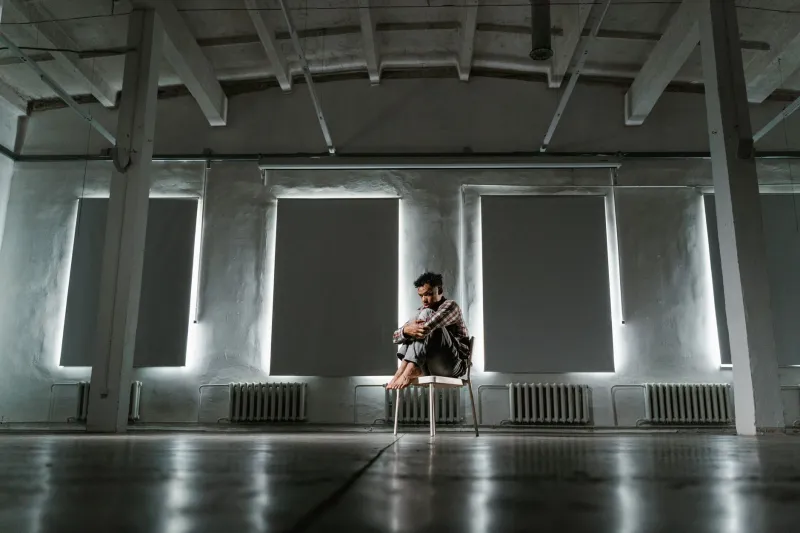
There is a particular kind of dread that arrives not with noise or chaos, but with silence. Not the comfortable silence of a Sunday morning, but the hollow, yawning kind—the blank calendar page, the empty inbox, the weekend with no plans. For millions of Americans navigating anxiety disorders, this experience is not simply boredom or restlessness. It may point to something far more specific: kenophobia, the fear of empty spaces, voids, or nothingness.
Kenophobia is rarely discussed in mainstream mental health conversations, yet its fingerprints are visible across a wide range of modern behaviors. Understanding it requires looking not just at what people fear, but at what the absence of something represents to the anxious mind.
What Exactly Is Kenophobia?
Derived from the Greek word kenos, meaning empty or void, kenophobia is broadly defined as an irrational and persistent fear of emptiness. It can manifest physically—in the discomfort some people feel standing in a large, bare room—or psychologically, through profound unease in the face of unstructured time, blank creative canvases, or social voids like an unfilled feed or an unanswered message.
While kenophobia does not appear as a standalone diagnosis in the Diagnostic and Statistical Manual of Mental Disorders (DSM-5), it is recognized within the broader framework of specific phobias and anxiety-related conditions. Clinicians who work with anxious patients frequently encounter its hallmarks, even when the phobia itself goes unnamed.
The fear is distinct from claustrophobia, which involves enclosed spaces, and from agoraphobia, which centers on situations where escape feels impossible. Kenophobia is about the void itself—the absence of content, structure, or meaning—and the existential discomfort that absence provokes.
The Modern Landscape of Emptiness Anxiety
It is worth asking why kenophobia seems to be gaining visibility now. The answer may lie in how dramatically the architecture of daily American life has changed over the past two decades.
Smartphones, streaming platforms, and social media have collectively engineered an environment in which stimulation is perpetually available. The average American adult now spends over seven hours per day looking at screens, according to data from Statista. When that stimulation is suddenly withdrawn—when the Wi-Fi drops, when a social feed runs dry, when a weekend arrives with no scheduled activity—the contrast can feel jarring in a way that previous generations may not have experienced as acutely.
For individuals already predisposed to anxiety, this contrast does not merely feel uncomfortable. It can feel threatening. The empty space becomes something to be filled, managed, or escaped—at almost any cost.
This dynamic shows up in recognizable patterns:
- Overscheduling: Filling every hour of a calendar to avoid any gap, then feeling panicked when a cancellation creates unexpected free time.
- Compulsive content consumption: Scrolling through social media not out of interest, but out of an inability to tolerate the absence of input.
- Creative paralysis: Staring at a blank document, canvas, or page and feeling not just stuck, but genuinely afraid—as though the emptiness itself is dangerous.
- Discomfort with silence in relationships: Rushing to fill conversational pauses, interpreting quiet as rejection or disconnection.
The Existential Dimension
Kenophobia does not exist in isolation. For many sufferers, the fear of emptiness is entangled with deeper existential questions: Who am I when I am not doing anything? What does my life mean if I am not producing, connecting, or achieving?
This is where kenophobia brushes up against what philosophers have long called existential dread—the anxiety that arises when confronting the open-endedness of human existence. The blank page, the empty afternoon, the unstructured life stage: each of these represents a kind of freedom that, paradoxically, some minds experience as terrifying rather than liberating.
Psychologist Erich Fromm wrote extensively about the human tendency to flee from freedom when it feels overwhelming, preferring the comfort of structure and external direction. Contemporary research echoes this. A widely cited 2014 study published in Science found that many participants preferred administering mild electric shocks to themselves rather than sitting alone with their thoughts for as little as fifteen minutes. The void of unoccupied mental space, the research suggested, is something a significant portion of people actively seek to escape.
For individuals with kenophobia, this impulse is not a quirk. It is a compulsion.
Distinguishing Kenophobia from Related Conditions
Because kenophobia overlaps with several other anxiety presentations, accurate identification can be challenging. It shares features with:
- Phobophobia (the fear of fear itself), in that the anticipation of emptiness can generate its own spiral of dread.
- Atychiphobia (fear of failure), particularly when blank creative spaces are involved.
- Nomophobia (fear of being without a mobile phone), which often functions as a mechanism for avoiding the void of disconnection.
What distinguishes kenophobia is that the core fear is the emptiness itself—not what might happen within it, not the judgment of others, not the loss of opportunity. The void, in and of itself, is the threat.
Grounding Techniques for Managing Emptiness Anxiety
If the patterns described here feel familiar, there are evidence-informed strategies that can help reduce the distress associated with unstructured or empty experiences.
Structured exposure: Gradually and intentionally introducing small periods of unstructured time—beginning with five or ten minutes—can help desensitize the nervous system to the experience of emptiness. Over time, the brain begins to register the void as safe rather than threatening.
Sensory anchoring: When emptiness anxiety spikes, grounding through the five senses can interrupt the cognitive spiral. Naming five things you can see, four you can hear, three you can touch, two you can smell, and one you can taste redirects attention from abstract dread to immediate, concrete experience.
Reframing the narrative: Cognitive behavioral therapy (CBT) techniques encourage individuals to examine the stories they attach to empty space. Is an unscheduled Saturday truly dangerous, or has the mind learned to interpret it as such? Working with a licensed therapist to identify and challenge these narratives can be profoundly effective.
Mindfulness practice: Meditation traditions across cultures have long recognized the discomfort of sitting with nothingness—and have developed sophisticated tools for doing so. Apps like Headspace and Calm offer guided introductions, though working with a mindfulness-based therapist provides the deepest support.
Limiting avoidance behaviors: Each time a person reaches for their phone, turns on background television, or schedules an unnecessary commitment to escape the void, the fear is reinforced. Gradually reducing these avoidance behaviors—with professional support when needed—is central to long-term recovery.
Seeking Support
Kenophobia, like many specific phobias, responds well to treatment when properly identified. If you recognize significant distress around empty time, blank spaces, or unstructured experience in your own life, speaking with a licensed mental health professional is a meaningful first step. The Anxiety and Depression Association of America (ADAA) maintains a therapist directory at adaa.org that can help connect you with a specialist in your area.
The fear of nothing, it turns out, is something very real. And like most fears, it becomes less powerful the moment it is named.