When Home Becomes the Haunted House: Understanding the Fear of Familiar Places
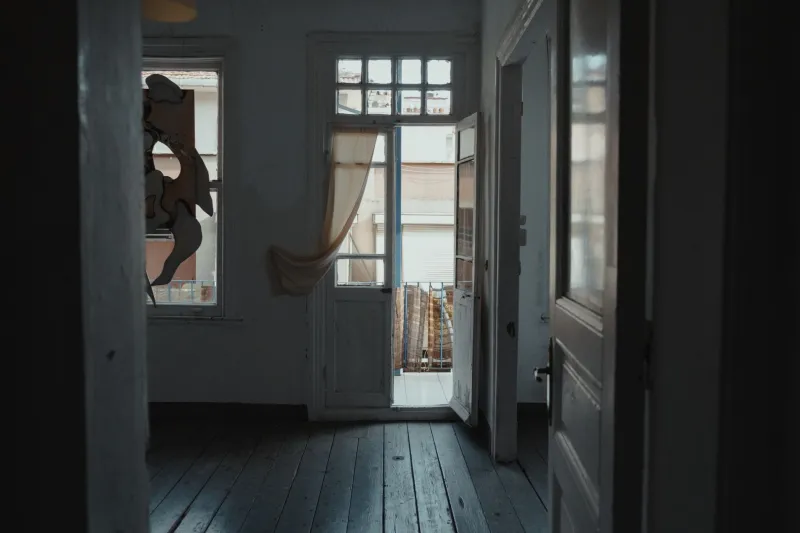
There is an unspoken contract most of us accept without question: home is safe. It is the place where you exhale, where the outside world loses its grip, where the familiar hum of the refrigerator and the particular slant of afternoon light through a specific window form a kind of emotional armor. For millions of Americans, that contract holds. For others, it is written in invisible ink — and the moment they step through the front door, it dissolves entirely.
Oikophobia, derived from the Greek oikos meaning household, is the persistent and irrational fear of one's own home or familiar domestic surroundings. It is a condition that sits at an uncomfortable intersection of psychology and lived experience, precisely because it inverts one of our most fundamental assumptions about human comfort. To understand it is to confront something deeply unsettling: that safety, as a psychological state, is never guaranteed by geography alone.
More Than Homesickness in Reverse
It would be easy to dismiss oikophobia as a quirky preference — a strong desire to travel, perhaps, or a restless personality that chafes against routine. That misreading does a serious disservice to those who experience it clinically. The distinction between disliking your surroundings and experiencing genuine phobic responses to them is the difference between mild discomfort and a full-spectrum anxiety reaction.
For individuals with oikophobia, entering a familiar domestic space can trigger racing heartbeat, shortness of breath, nausea, and an overwhelming urge to flee. These are not metaphorical responses. They are the same physiological markers present in any clinically recognized phobia — the amygdala firing its alarm signals, the body flooding with stress hormones, the rational mind temporarily surrendering to a perceived threat that others simply cannot see.
What makes this phobia particularly isolating is the social illegibility of it. When someone fears spiders or heights, the world at least understands the concept, even if it doesn't share the intensity. When someone explains that their living room makes them feel like they cannot breathe, the response is often confusion, skepticism, or well-meaning but unhelpful advice to redecorate.
The Trauma Embedded in Familiar Walls
Psychologists exploring oikophobia frequently encounter a common thread: the home, or a home from the past, was not always safe. For many sufferers, the fear is less about the physical space itself and more about what that space represents — or what happened within it.
Childhood trauma is one of the more documented contributors. When formative experiences of instability, abuse, neglect, or conflict occurred within a domestic environment, the nervous system can develop a conditioned association between familiar home-like settings and threat. The smell of a particular cleaning product, the sound of a screen door, the specific quality of silence in a hallway — these sensory cues become embedded in the body's threat-response system long after the original danger has passed.
This is consistent with broader research into how trauma shapes environmental triggers. The brain is an extraordinarily efficient pattern-recognition machine, and it does not always distinguish between this specific house and all houses that feel like this one. Familiarity, in these cases, is not reassuring. It is activating.
Control, Stagnation, and the Pressure to Escape
Not all oikophobia originates in trauma. A separate but related psychological mechanism involves the fear of stagnation — a deep, anxiety-laden belief that remaining in familiar territory signals personal failure or psychological entrapment.
American culture, perhaps more than most, places enormous value on reinvention, mobility, and the pursuit of something better. The cultural mythology of leaving your small town, of building a new life somewhere else, of refusing to be defined by where you came from — these narratives are woven into the national identity. For individuals who have internalized this framework intensely, the familiar home can begin to symbolize everything they fear most: being stuck, being ordinary, being unseen.
In these cases, oikophobia may present less as a fear of the space itself and more as a fear of what staying means. The anxiety is existential as much as environmental. Returning to a childhood home for the holidays, for example, might not just feel uncomfortable — it might trigger a genuine sense of psychological suffocation, as though the walls are closing in not physically but narratively.
This variant of the phobia intersects with issues of identity, autonomy, and the psychological need for growth. Therapists working with these clients often find that the fear of familiar places is inseparable from a fear of a former self — the person they were in that space, and the person they are terrified of becoming again.
The Paradox at the Center
What makes oikophobia philosophically compelling, and clinically challenging, is the paradox it exposes. Human beings have two competing and equally powerful psychological needs: the need for stability and the need for novelty. Most people navigate this tension without crisis, finding equilibrium between the comfort of the known and the stimulation of the new.
For those with oikophobia, that equilibrium has collapsed in a specific direction. The known is not comforting. It is threatening. And this creates a particularly cruel feedback loop: the very place a person might retreat to when the world becomes overwhelming is itself a source of overwhelm.
Some researchers have noted that oikophobia can coexist with, or even be mistaken for, related conditions such as agoraphobia — the fear of situations where escape might be difficult — or claustrophobia when the domestic space feels physically constricting. Accurate diagnosis matters enormously here, because the underlying mechanisms, and therefore the most effective therapeutic approaches, differ substantially between these conditions.
Finding Ground When the Ground Itself Feels Unsafe
Treatment for oikophobia typically draws from the same evidence-based toolkit used for other anxiety disorders, though it requires careful calibration given the unique nature of the trigger. Cognitive behavioral therapy (CBT) is frequently employed to help individuals examine and restructure the beliefs and associations that make familiar environments feel dangerous. Exposure therapy, conducted gradually and with clinical support, can help desensitize the nervous system's threat response to domestic spaces.
For those whose oikophobia is rooted in trauma, trauma-focused therapeutic modalities — including EMDR (Eye Movement Desensitization and Reprocessing) — have shown meaningful results in helping patients process the original experiences that became embedded in environmental memory.
Perhaps most importantly, simply naming the condition can be its own form of relief. One of the consistent findings across anxiety research is that labeling a fear — giving it a clinical name, understanding its psychological architecture — reduces its power. Knowing that what you experience has a name, that others share it, and that it is understood within the field of mental health is not a cure. But it is a beginning.
For anyone who has ever stood in their own hallway and felt an inexplicable urge to run, that beginning may be exactly what is needed.
If you or someone you know experiences significant anxiety related to familiar environments or domestic spaces, speaking with a licensed mental health professional is an important first step. Resources are available through the Anxiety and Depression Association of America (ADAA) at adaa.org.