Boundless and Terrified: The Psychological Weight of Spaces Without Walls
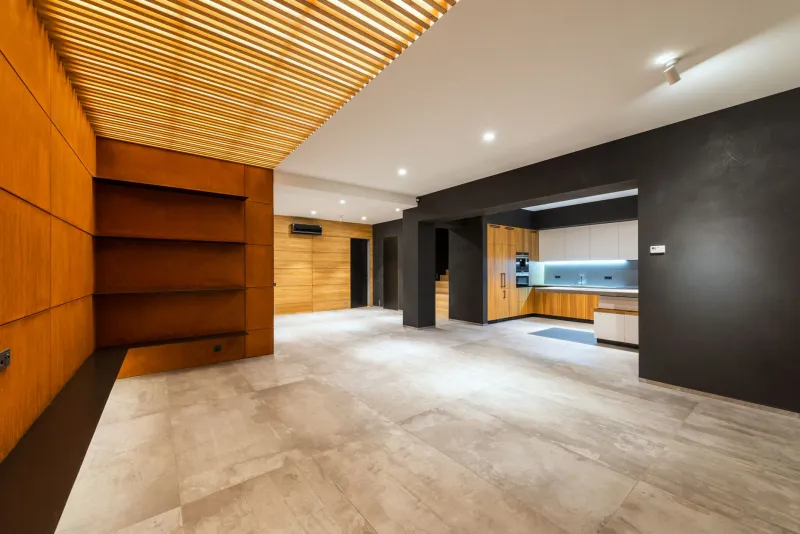
Imagine walking into a newly renovated office. The walls have been removed. The ceiling stretches high overhead, and the floor extends in every direction without partition or anchor. For most workers, this signals modernity and collaboration. For a smaller, rarely discussed subset of the population, it signals something closer to emergency.
This is not claustrophobia in reverse, though it is sometimes mistaken for it. Nor is it simply a preference for coziness. What some individuals experience in open, unstructured, or boundary-free environments is a specific and often debilitating anxiety—one that deserves both a name and a serious clinical conversation.
The Anatomy of the Fear
The experience typically unfolds in predictable stages. A person enters a space that lacks clear physical delineation—an empty loft apartment, a sprawling prairie, a blank conference room stripped of furniture—and begins to feel what many describe as a loss of self-location. The body is present, but without visual anchors, the nervous system struggles to confirm where the self ends and the environment begins.
This is not metaphorical. Research in environmental psychology has long established that spatial boundaries serve a regulatory function for the human brain. Walls, furniture, and defined zones provide what psychologists call environmental affordances—cues that tell us how to behave, where to stand, what to expect. When those cues disappear, some individuals experience a cascade of anxiety symptoms: racing heart, shallow breathing, a compulsive urge to locate an exit or press their back against something solid.
In clinical literature, this phenomenon intersects with several recognized conditions. Agoraphobia is the most commonly cited, though that diagnosis more precisely describes the fear of situations where escape might be difficult. Kenophobia—the fear of empty spaces or voids—is a closer match, though it remains underdiagnosed and underrepresented in mainstream psychological discourse. Some clinicians also draw connections to a broader category of spatial anxiety, which encompasses distress triggered by environments that violate a person's internalized sense of containment.
Why Containment Feels Like Safety
To understand why some people need walls, it helps to understand what walls actually do for the human psyche.
From early childhood, enclosed spaces are associated with protection. The crib, the bedroom, the familiar corner of a classroom—these are not merely physical locations. They are psychological containers. They tell the developing nervous system: you are held here, you are bounded, you are safe. For individuals who experienced early environments characterized by unpredictability or instability, this association between enclosure and safety can become particularly entrenched.
Attachment theory offers a useful framework here. When early caregiving environments are inconsistent, children sometimes develop a heightened reliance on physical space as a substitute source of regulation. The room itself becomes the caregiver. Decades later, that same individual may find that open, unstructured environments reactivate the original sense of being uncontained—of existing in a world without reliable edges.
This is not a character flaw. It is an adaptation that served a purpose and then outlived its usefulness.
The Minimalism Problem
It would be difficult to discuss this phobia in 2024 without acknowledging the cultural context in which it is increasingly occurring.
Over the past two decades, American interior design has undergone a dramatic philosophical shift. Open-concept floor plans became the dominant residential and commercial aesthetic. Minimalism—surfaces cleared, walls removed, visual noise eliminated—became synonymous with sophistication and mental clarity. The real estate industry actively marketed the absence of walls as a selling point.
For individuals with anxiety rooted in spatial containment, this trend has created a quiet and largely unacknowledged crisis. They are being asked to live, work, and socialize in environments that are architecturally optimized to trigger their specific fear. And because the cultural narrative around open spaces is overwhelmingly positive—freedom, light, flow, openness—those who find such spaces distressing often have no language for their discomfort. They assume something is wrong with them rather than recognizing a legitimate psychological response.
Some report avoiding open-plan offices entirely, declining jobs or apartments that might otherwise be ideal. Others describe elaborate compensatory strategies: positioning themselves near walls, keeping a specific chair between themselves and the open floor, or working with headphones as a kind of acoustic enclosure. These are not quirks. They are coping mechanisms for a fear that the broader culture has not yet learned to take seriously.
What the Research Suggests
Formal research on kenophobia and spatial anxiety remains limited, in part because the conditions are difficult to isolate in a clinical setting. Most studies examining anxiety and physical space have focused on crowding and overstimulation rather than emptiness and under-stimulation. This gap in the literature reflects a broader bias: psychology has historically paid more attention to what overwhelms people than to what fails to contain them.
However, adjacent research is instructive. Studies on sensory processing sensitivity have found that a significant minority of individuals process environmental stimuli with unusual depth and intensity. For this group, the absence of structure is not neutral—it is itself a form of sensory data, and an unsettling one. Work in environmental neuroscience has similarly demonstrated that the brain's default mode network—associated with self-referential thought and existential rumination—becomes more active in sparse, unstructured environments. For individuals already prone to anxiety, this activation can tip into genuine distress.
Living With the Fear—and Moving Through It
For those who recognize themselves in this description, the first and most important step is validation. The fear of open, unstructured spaces is real. It has psychological roots that are well-understood, even if the specific phobia remains undernamed in popular discourse. You are not simply being dramatic about furniture.
Therapeutic approaches that have shown promise include cognitive behavioral therapy adapted for environmental triggers, exposure therapy conducted in gradual increments, and somatic practices that help individuals rebuild a felt sense of internal containment independent of external architecture. Some therapists also work with clients on the underlying attachment dynamics that made spatial boundaries so necessary in the first place.
Practical accommodations matter too. Advocating for a workspace that includes visual anchors, negotiating for a desk near a wall, or simply naming the preference to a partner or employer can reduce the daily toll of managing an unacknowledged fear in silence.
The spaces we inhabit shape us in ways we rarely examine. For some people, the shape they need is one that holds them—and there is nothing unusual about needing to be held.